
How to Begin Documenting Your Life

Many people never document their lives because they don’t know where to begin or what to include. Learn how to start documenting your life with just ten stories.

Why Documenting is Important
How many times have you shared a memory from your past? My guess is too many to count! We do it all the time, right? We chat with friends and family, and the “Remember when… ” conversation begins. But would anyone be able to recall the story you shared a year later? or even a week later? Sadly, the answer is probably no. They may remember bits and pieces, but the specific details will most likely be forgotten. Isn’t it amazing how quickly even we forget the details of our own lives?!
If you’re reading this post, I hope it’s because you don’t want your most cherished memories to be forgotten. You realize that documenting your memories is important, but you just don’t know how or where to begin. Well, the good news is that it doesn’t have to be time consuming or complicated. Let’s break it down into a manageable plan.
Document Your Life First
Many people begin scrapbooking or journaling because they want to document their children’s lives or family events . However, I encourage you to start with your own life. It’s fine to include memories regarding other family members, but I strongly suggest that for every story you document about someone else, you also tell at least one story about yourself. Why? Because your children will remember much of their own lives but your children and grandchildren won’t necessarily remember your life stories.
Documenting your life is less about genealogy and more about personal stories. It’s about giving future generations a glimpse into your backstory. You are sharing a piece of yourself in a format that can be enjoyed for years to come. Once you’ve accepted that your own story matters, the next step is choosing where to begin.
Pick 10 Stories to Share
Here’s an important thought: documenting your life is an ongoing process. Don’t treat this as a checklist that must be completed within a certain amount of time. And it doesn’t have to be a chronological exercise covering your entire life. Instead, sit down and ask yourself:
- What are ten stories from my life that I would like to share with others?
- What would I like friends and family to know about me?
Why Ten Stories?
Obviously no one’s life can be summed up in just ten stories. After all, we create new memories every day. But ten stories is a great starting point. It’s a manageable number that doesn’t feel overwhelming.
So, choose ten stories that you want to share. They don’t all have to be major milestones. Your ten could include childhood memories or something that just happened last week. Whether old or new, each story should offer insight into your personality – your likes, dislikes, hobbies, achievements or even failures. Just start with ten memories to get the ball rolling!
Need Help?
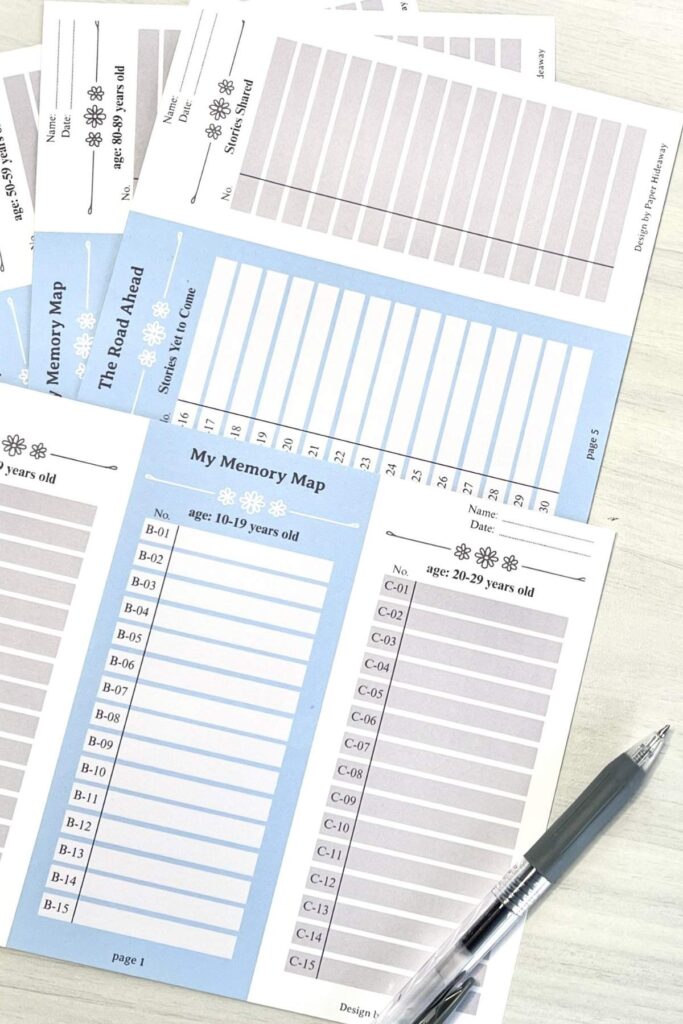
Drawing a blank on which ten stories you want to tell? My Memory Map is an exercise that helps you build a list of memories to draw from as you begin documenting your life. Download this FREE resource to get started!
Choose a Format for Documenting Your Life
There are many ways to store your memories: journals, photo albums, photo boxes, scrapbooks, videos and even social media posts. When choosing a format, consider:
- Who do I intend to share these memories with?
- How do I want others to view them: In a physical form or online?
- Do I plan to include photos or videos to illustrate my stories?
- Do I have memorabilia that I’d like to incorporate?
- Would I rather type or handwrite my stories?
- Do I want this information available online?
- How will other family members find these memories in the years to come?
I recommend using a format that you feel comfortable with today. Now is not the time to wrestle with complicated software if you don’t consider yourself to be tech-savvy. Documenting your life should be fun – not frustrating. So keep it simple!
Tell the Short Version
We live in an age where we’re bombarded with information constantly. Our attention spans are short. So, keep your stories concise and to the point. Remember, family and friends want to learn about you, but probably in bite-size nuggets rather than reading a memoir. Share the most memorable details of your story and move on to the next one.
Each story should answer the 5 W’s :
- Who? Identify the people involved, using first and last names.
- What? Tell the important facts while staying concise.
- When? Provide a date – an approximate date is better than none.
- Where? Include the location.
- Why? Explain what makes this story special to you.
Structuring each story around the 5 W’s will keep them focused and make the process more efficient when you’re putting together all ten stories.
Regardless of which format you choose, be sure to include the date when you record each individual story. Documenting your life is an ongoing process, and your stories may be written over months or years. By dating them, you give readers insight into where you were in your life when you shared each memory.
Stay Consistent
Decide on a realistic schedule for completing your ten stories. How much time can you commit each week? Then set aside that time and stick to it. Remember, if you don’t document these memories now, they may fade away forever.

That said, life happens. If you miss a week, or a month, don’t quit! Simply pick up where you left off, because progress is better than perfection.
The most important part is to share ten short stories. Once you’ve documented those, you’ll likely feel motivated to write the next ten. Trust the process, keep sharing, and keep documenting your life.
Just Remember
“What makes your story remarkable is the way that you tell it.”